Chimney Rebuild vs. Chimney Repair: How to Know Which One You Need
Two Options, One Right Answer for Your Home
You know your chimney needs work. Maybe the mortar's crumbling, bricks are popping, or a contractor already told you it's time. But now you're hearing two different recommendations — repair and rebuild — and the price gap between them can be significant. So how do you know which one you actually need?
It's a fair question, and it's one our CSIA-certified technicians answer for New Jersey homeowners every week. In this guide, we'll break down exactly what each option involves, when one makes more sense than the other, and how to avoid overpaying for work you don't need — or underpaying for a fix that won't last.
Get a Free Estimate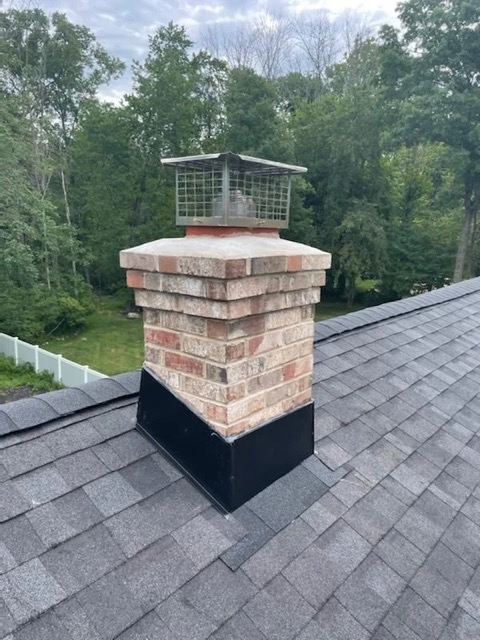
When the Structure Is Sound but the Details Need Attention
Chimney repair covers targeted, localized work on a chimney that's still structurally stable. The most common repair is repointing — grinding out deteriorated mortar joints and packing in fresh mortar. Other repair work includes replacing a handful of spalled or cracked bricks, sealing or rebuilding the chimney crown, replacing a rusted or missing chimney cap, and fixing or replacing flashing where the chimney meets the roofline. In all these cases, the chimney itself stays standing. You're restoring components that have worn down, not replacing the structure.
Repair is the right call when damage is limited to the surface layer — the outer mortar and a few individual bricks — while the inner core, flue liner, and overall structural alignment are intact. A well-executed repair can extend a chimney's working life by 15 to 25 years, depending on the original construction quality and how exposed the chimney is to weather. It's also significantly less expensive than a rebuild, which is why it's worth getting an honest assessment from a contractor who'll actually tell you when repair is enough.
"I worked with Mike and he was super responsive and helpful. They repointed our chimney and came up with some ideas on how to improve the overall look of our original 1910 stone fire place."
See our profileWhen the Damage Runs Deeper Than the Surface
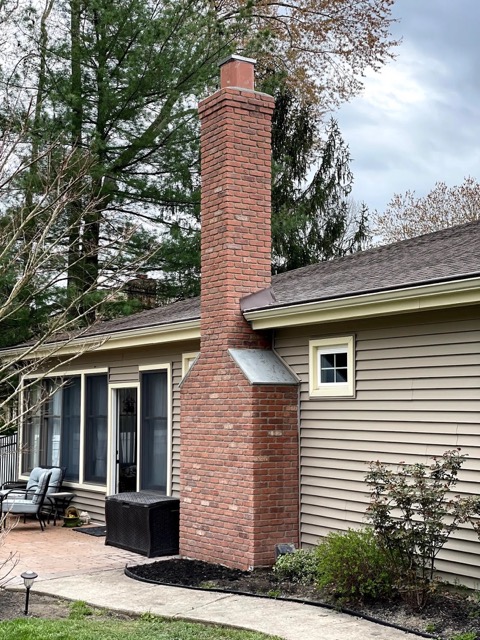
A chimney rebuild means taking down part or all of the existing chimney structure and reconstructing it with new materials. The most common version is a partial rebuild from the roofline up — that's the section most exposed to rain, snow, ice, and wind, and it's where damage accumulates fastest. In more severe cases, the rebuild extends below the roofline when the interior masonry or foundation has also failed.
Rebuilds are necessary when the damage has moved past the surface. If mortar has turned to powder deep into the joints, if bricks can be pulled apart by hand, if the chimney is visibly leaning or separating from the house, or if multiple faces of brick are spalling throughout the stack — repair won't hold. You'd be patching a structure that's fundamentally compromised. A full rebuild gives you a brand-new chimney built to modern standards, with properly matched brick and a 50-year warranty from our team.
"Top Notch did a wonderful job tearing down a rocking 80-year-old chimney. From teardown to construction of a new chimney, they are perfection in workmanship and cleanup."
See our profile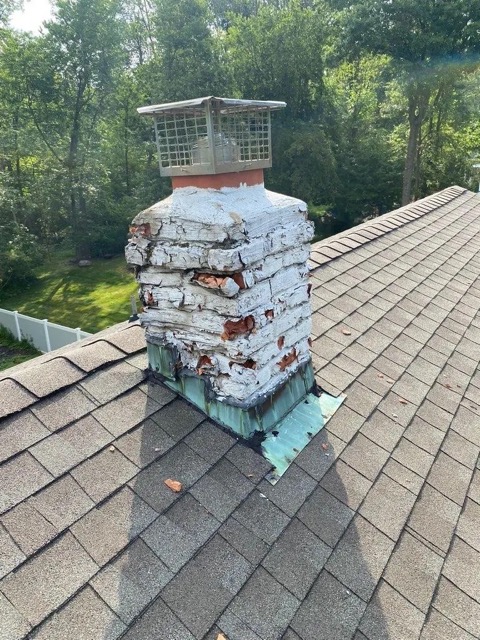
Here's How We Determine Which Route to Take
When our technicians inspect a chimney, they're evaluating a handful of specific factors that tell us whether repair will hold or whether the chimney needs to come down. The first thing we check is mortar depth — if we can scrape mortar out of the joints with a flathead screwdriver more than half an inch deep, the deterioration has gone past what repointing alone can address reliably. Next is brick integrity: isolated spalling on a few bricks is repairable, but if faces are popping off across multiple courses on two or more sides, the brick stock itself is failing. We also look at alignment — a chimney that's leaning, tilting, or separating from the house framing has a structural issue that cosmetic repair can't correct.
Then there's the interior. A cracked or deteriorated flue liner doesn't automatically mean you need a rebuild, but it adds to the total scope. If the chimney needs a new liner, new crown, new flashing, and extensive repointing, at a certain point the combined repair cost approaches the cost of a rebuild — and the rebuild comes with a 50-year warranty and an entirely new structure. That's the honest math we walk homeowners through during every estimate. Sometimes repair is the clear winner. Sometimes rebuild makes more long-term sense. We lay out both options and let you decide.
Repair Costs Less Upfront — But Only If It's the Right Call
On paper, repair is always the cheaper option. Repointing a section of chimney or replacing a crown costs a fraction of what a rebuild runs. But here's the trap: if you repair a chimney that actually needs a rebuild, you'll be paying for that repair again in two or three years when the underlying structural issues resurface. We've seen homeowners spend more on repeated repairs over a five-year span than a single rebuild would have cost upfront.
A rebuild is a bigger investment initially, but it resets the clock completely. You get new materials, modern construction standards, matched brickwork, and — in our case — a 50-year warranty that covers both craftsmanship and materials. When we quote both options, we include the expected lifespan of each so you can compare the true cost over time, not just the invoice today. We also offer lining system installations as part of rebuild projects, which carry a separate lifetime warranty.
From First Call to Finished Chimney — No Surprises
Whether your project ends up being a repair or a rebuild, the process starts the same way. You call or request an estimate online, and we schedule a free on-site inspection — usually within a few days. A CSIA-certified technician examines the full chimney system, takes photos, and walks you through the findings right there. You get a written scope of work and a firm price before anything starts.
For repairs, most jobs wrap up in one to two days. Rebuilds typically run two to four days for a partial (roofline up) and longer for full-structure projects. Our crews protect your landscaping, roof surface, and siding throughout the project, and we clean every trace of debris when we're done — including checking neighboring properties. That's not a sales line; it's something our customers mention in their reviews consistently.
"Quality work, great communication, and honesty. Our chimney looks great and we have confidence that it was done right. When we ran into unexpected issues, we got immediate communication and sensible fixes."
See our profile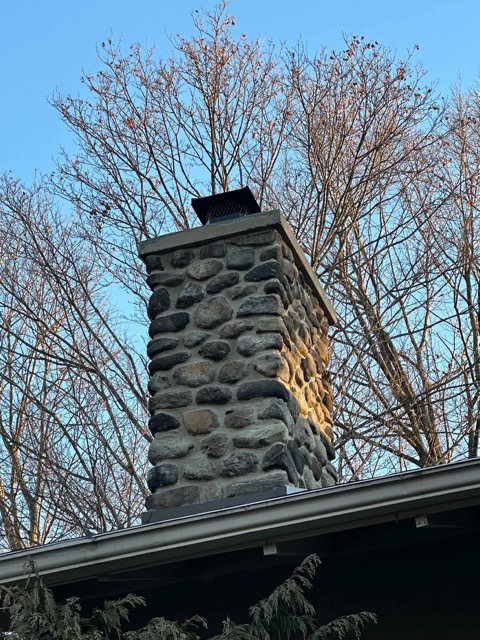
I would like to extend my heartfelt gratitude to Mike and his entire team at Top Notch 1 Construction LLC for their exceptional service. Every question I had was answered promptly and thoroughly, providing me with peace of mind throughout the process. The quality of work was outstanding, and the team executed the repairs with impressive attention to detail and craftsmanship. I truly appreciated their honesty and reliability — they delivered exactly what they promised.
Rebuild vs. Repair FAQs
Sometimes yes, sometimes no. If the structural core is solid and the damage is limited to surface mortar and a few bricks, repair is usually the right and more affordable choice. But if the mortar has deteriorated deep into the joints, bricks are separating by hand, or the chimney is leaning, repair won't solve the underlying problem. We inspect the full system and give you an honest recommendation — we don't push rebuilds when repair will do.
A properly built chimney with quality materials should last 50 years or more with basic maintenance. Our rebuilds carry a 50-year warranty on craftsmanship and materials, so you're covered if anything goes wrong. The key factors that determine lifespan are brick quality, mortar composition, crown construction, and whether a proper cap is installed to keep water out.
We go to great lengths to match new brick to the original. Our team sources materials based on the size, color, texture, and weathering pattern of your existing masonry. For partial rebuilds where the new section meets the old below the roofline, a clean match is especially important — and it's something we take a lot of pride in getting right.
Not necessarily. Most chimney work happens from the roofline up, so our crews don't typically need interior access unless we're also servicing the flue liner or firebox. We'll let you know during the estimate if interior access is needed. Otherwise, you're free to go about your day while we work.
It can happen — sometimes damage that's invisible from the outside reveals itself once work begins. If our crew discovers conditions mid-project that change the scope, we stop and call you immediately. We explain what we found, show you photos, and give you a revised price before proceeding. You'll never come home to a bigger bill than you agreed to. That's a non-negotiable for us.
Related Services
Flue Repair
Cracked or deteriorated flue liners repaired or replaced to restore safe venting and pass inspection.
Learn MoreLining Systems
Stainless steel chimney liners with lifetime warranties, installed by CSIA-certified technicians.
Learn MoreRoofing Services
Repairs, replacements, and inspections — handle your roof and chimney in one project with one crew.
Learn MoreWe'll Show You — Free
Skip the guesswork. Our free on-site inspection gives you a clear diagnosis, honest recommendation, and firm pricing — repair or rebuild — with zero obligation. Photos included so you see exactly what we see.
Call or Request Online
Reach out by phone or through our site. We'll get you on the schedule within days.
Full Chimney Inspection
A CSIA-certified tech examines every component — crown to firebox — and photographs the findings.
Clear Options, Fair Price
You get a written scope and on-the-spot pricing for the right solution. No pressure, no hidden fees.