Does Your Chimney Need a New Liner? A New Jersey Homeowner's Guide
Your Liner Does the Hardest Job in the House
Most homeowners never think about the liner until a plumber, a home inspector, or a buyer's attorney tells them there's a problem. It sits out of sight inside the chimney, absorbing the full heat and acidity of everything your fireplace, furnace, boiler, or water heater sends up the flue. It is the one component standing between those gases and the wood framing of your house.
This guide covers what a liner actually does, how to tell yours is failing, the three types we install, when code forces the issue in New Jersey, and what the job looks like from your side of it. If you want the seasonal version instead, our chimney maintenance guide walks through the whole system year by year.
Get a Free Estimate!
Everything a NJ Homeowner Should Know About Liners
Five sections, no filler. Start at the top if you're new to this, or jump to the part you came here for.
What a Chimney Liner Actually Does
Every chimney has a flue — the vertical shaft that carries smoke, heat, and combustion gases out of the house. The liner is the protective sleeve inside that shaft, and it does three jobs at once. It keeps searing flue gases off the surrounding masonry and the framing behind it. It blocks carbon monoxide from seeping through mortar joints into bedrooms and hallways. And it gives the flue the correct diameter so your fireplace or heating appliance drafts the way the manufacturer intended. When a liner cracks or corrodes, all three protections go at once, and you almost never see it from the ground. That's why our chimney lining systems start with a camera scan of the full flue interior instead of an educated guess.
"Had Top Notch 1 Chimney repair my chimney crown and reline my fireplace with a stainless steel liner. What I liked most was their transparency—they walked me through the whole process step by step."
See our profile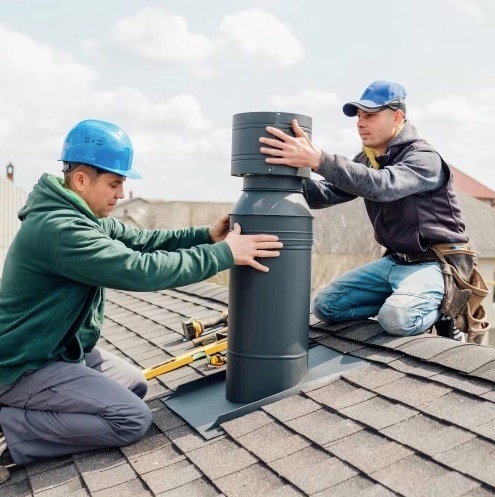
How to Tell Your Liner Is Failing
Liners fail quietly, but they leave evidence. The most common signs are shards of clay tile in the firebox or piled at the base of the cleanout door, white chalky staining on the outside brick, a heavy smoky smell that lingers long after a fire is out, and rust flaking off the damper or the firebox walls. If you burn wood, creosote that builds back up unusually fast season after season can mean the flue is oversized or the liner has gaps letting gases cool too early. None of these prove a failed liner on their own. Any one of them is a good reason to have the flue scanned before you light the next fire.
Water is the other driver. A failing crown or bad flashing soaks the chimney from above, and New Jersey's freeze-thaw cycle does the rest to the tile below. If you've seen stains on the ceiling near the chimney chase, start with why your chimney is leaking, then talk to us about chimney repair in New Jersey.
"They showed up on time, Mike explained what needed to be done, and did a really clean job. The chimney looks great, and everything was handled professionally from start to finish."
See our profile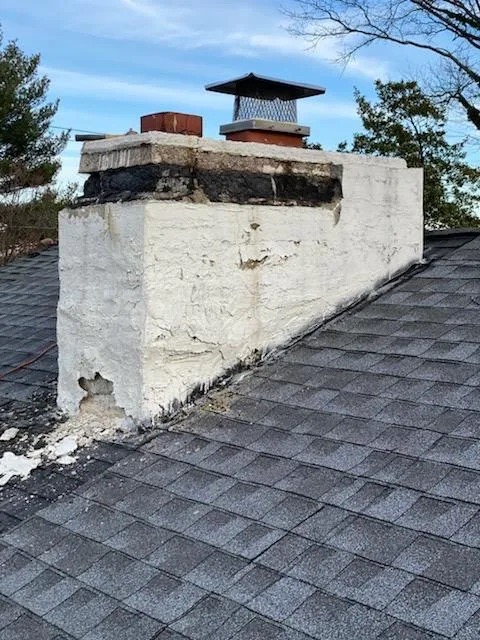
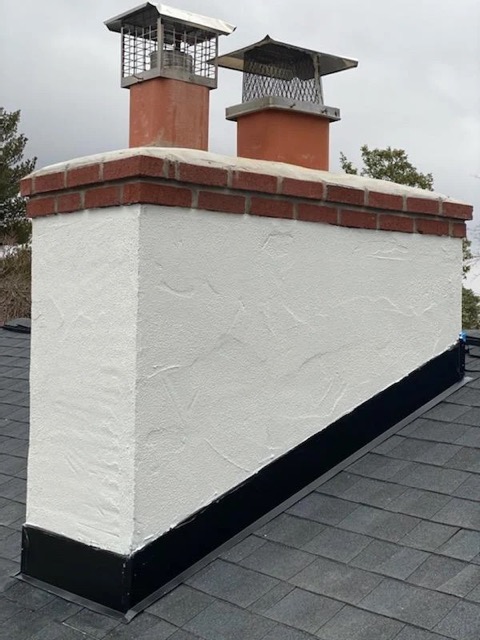
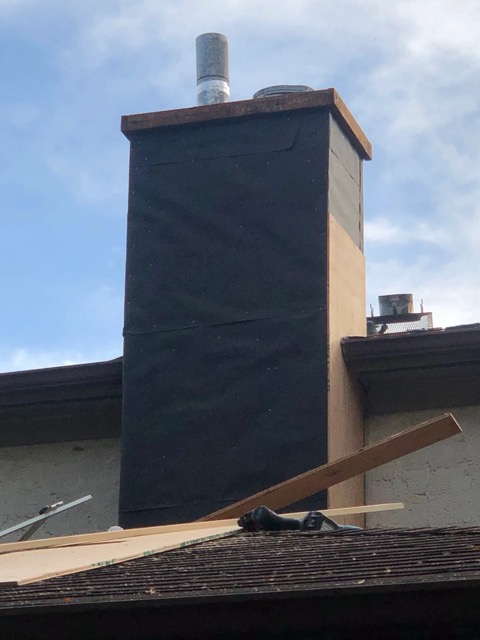
A North Jersey stucco chimney with a failed cap and open crown, rebuilt with a new brick top, fresh stucco, and new base flashing. Drag the handle to compare.
The Three Kinds of Liner, Explained
There are three liners you'll run into in New Jersey homes. Clay tile is what most pre-1980s masonry chimneys have — inexpensive, long-lasting, and prone to cracking under thermal shock or a chimney fire. Cast-in-place is a poured cement-style liner that reinforces the chimney structurally while it seals it, which makes it a strong option for older stacks that have gone soft. Stainless steel is what we install most often: flexible or rigid pipe sized to your exact appliance, wrapped in insulation, and rated for wood, gas, or oil. Which one you need depends on the chimney and the appliance, not on preference — and if your clay flue is only damaged in a section or two, flue repair may be all it takes.
"The team was professional, on time, and did high-quality work on my chimney. Mike explained everything clearly and took pride in the work. He took no shortcuts."
See our profile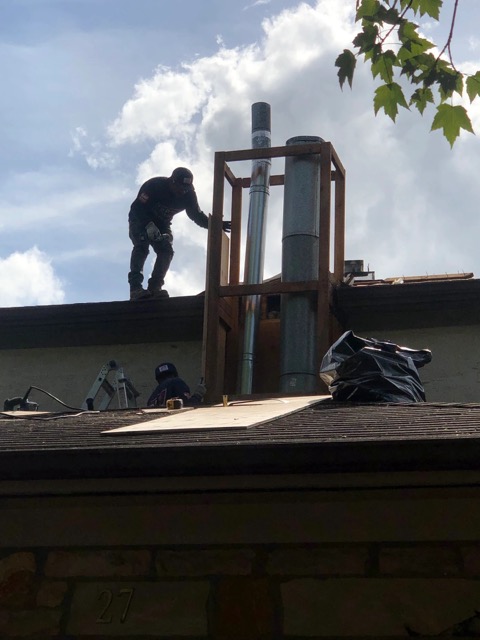

When Code Forces the Issue
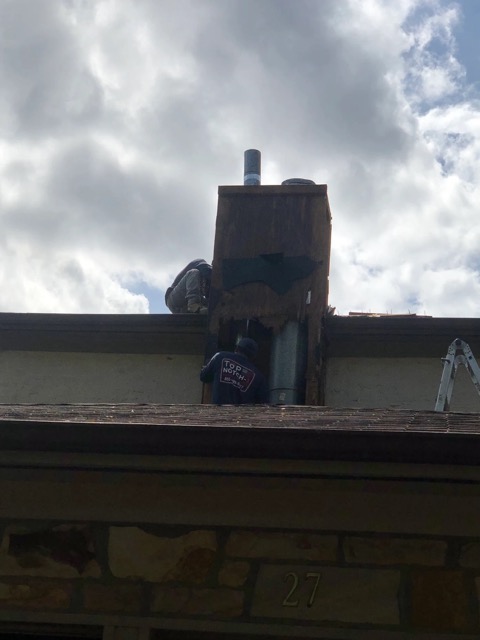
Sometimes relining isn't a judgment call. NFPA 211 — the chimney standard CSIA-certified technicians work to, and the one inspectors reference — calls for a Level 2 inspection any time the system changes: a new furnace, boiler, or water heater with a different input rating or efficiency, a switch in fuel type, a fireplace insert, or a flue that has been through a chimney fire. Selling the house triggers it too. The version we see most often runs like this: a homeowner installs a high-efficiency water heater, the old oversized clay flue can no longer keep the cooler exhaust warm enough to rise, condensation starts eating the masonry from the inside, and the appliance install won't pass without a correctly sized liner. And if the stack itself has already gone soft, relining alone won't save it — we'll say so on the spot, because sometimes the honest answer is a chimney rebuild instead.
"This company repointed my chimney almost 3 years ago. I had a problem and they came right away and fixed it. Reliable, honest and highly recommended!"
See our profileBook a Level 2 Inspection Near You
A Level 2 inspection is what actually answers the liner question. We scan the full interior of the flue with a camera, document the condition, and show you the footage — cracked tile, open joints, corrosion, blockages, or nothing wrong at all. It usually takes about an hour and ends with a written finding. If work is needed, you get the price on the spot before we pack up, and the estimate itself is always free with no obligation to book.
We're based in Saddlebrook and cover 16 counties across New Jersey. Check the full list of areas we serve, or tell us what you're seeing and we'll come take a look.
"Quality work, great communication, and honesty. Our chimney looks great and we have confidence that it was done right."
See our profileWhat a Reline Looks Like From Your Side
Six steps, no surprises. Here's exactly how the job runs from the first call to the warranty paperwork.
Call or Request a Visit
Tell us what you're seeing, or what appliance you're replacing. We book a time that works around you.
Camera Scan of the Flue
A certified tech runs a camera the full height of the flue and shows you the footage right there.
Written Finding + Price
You get the condition of the liner in writing and a firm number before we leave the driveway.
Sizing the Liner
We size the liner to your exact appliance and fuel type, then order it cut to your flue height.
Installation Day
Drop cloths go down first. Most single-flue relines finish in a day, cleanup included.
Final Check + Warranty
We verify the draft, seal the top plate and cap, and register your lifetime warranty.
Liner Questions We Get Every Week
Homes built before the 1940s often have nothing but bare brick inside the flue. If you look up past the damper and see only mortar and brick — no clay tile joints, no metal pipe — the flue is probably unlined. A camera scan settles it in a few minutes, and an unlined flue venting any appliance should be relined before it's used again.
Sometimes, yes. If the damage is limited to one or two clay tiles and the rest of the flue is sound, a targeted repair is the right call and costs a fraction of a full reline. If the cracking runs the height of the stack or the tiles have shifted out of alignment, patching buys you very little. We'll show you the camera footage so you can see which situation you're in.
A properly sized, insulated stainless liner installed by a certified tech is a once-in-a-lifetime job for most homeowners, which is why we warranty our lining systems for life. The failures we run into in the field are almost always undersized pipe, missing insulation, or an unsealed top plate — installation problems, not material problems.
Often, yes. Newer high-efficiency units send cooler exhaust up a flue that was sized for an older, hotter appliance. Instead of rising, those gases condense inside the chimney, and that moisture chews through mortar and clay tile quickly. Many towns won't sign off on the appliance install without a correctly sized liner, so it's worth checking before the plumber shows up.
If the chimney vents nothing at all, it's less urgent. But most chimneys in New Jersey are doing double duty for a furnace, boiler, or water heater even when the firebox sits cold all winter, and that flue still has to be sound. An unused fireplace flue in bad shape also keeps letting water into the structure.
It depends on flue height, whether the chimney runs straight or offsets, the fuel type, and whether the crown, cap, or flashing need attention at the same time. We don't quote liners over the phone, because that number would be fiction. The on-site estimate is free, the price we hand you is the price, and there's no obligation to book.
I contacted Top Notch 1 and spoke with Claude, who came out the very next morning to inspect the chimney. He thoroughly explained the installation process, discussed the project logistics, and answered all of my questions. On the day of the installation, Claude and his team arrived exactly on time and immediately took care to protect the work areas before getting started. They installed the new chimney liner and added insulation to improve the chimney's efficiency while enhancing its long-term strength and durability.
We Also Handle
Flue Repair
Targeted repair of cracked tiles, open joints, and damaged flues when a full reline isn't warranted.
Learn MoreChimney Rebuild
Full teardown and rebuild from the roofline up, backed by a 50-year warranty on the masonry.
Learn MoreRoofing
Roof repairs and replacements, including the flashing work where most chimney leaks actually begin.
Learn MoreWhy New Jersey Homeowners Trust Us
CSIA Certified
Our technicians are certified by the Chimney Safety Institute of America and work to NFPA 211 standards.
Lifetime Liner Warranty
Every lining system we install carries a lifetime warranty. Chimney rebuilds are backed for 50 years.
4.7 Stars on Google
Rated 4.7 out of 5 by New Jersey homeowners, A+ with the BBB, and Google Guaranteed.
Family Owned Since 2012
Same family, same crews, with more than 20 years of hands-on chimney experience behind them.
On-the-Spot Pricing
Free on-site estimates with a real number before we leave. No callbacks, no pressure, no bait pricing.
16 Counties Covered
Based in Saddlebrook and working across 16 New Jersey counties, from Bergen down to Cherry Hill.
Areas We Serve
Get Your Flue Scanned Before Heating Season
A camera scan tells you exactly what's inside your chimney — no guessing, no scare tactics. Estimates are free, pricing is on the spot, and the decision stays yours.
Reach Out
Call us or send a message describing what you're seeing. A real person answers.
We Scan the Flue
A certified tech inspects and films the full interior, then walks you through the footage.
You Decide
Written findings, a firm price, and no pressure. Book the work whenever you're ready.