Chimney Inspection Levels 1, 2 and 3: What Each Covers
Not Every Inspection Is the Same Inspection
If you've ever called around for a chimney inspection, you've probably gotten wildly different answers about what's included and what it costs. That's not because everyone's making it up. There are three defined levels of chimney inspection, they cover very different ground, and the one you need depends entirely on what's changed at your house.
This is worth understanding before you book anything. A homeowner who burns a few fires a winter and hasn't changed a thing needs something very different from someone who just had a chimney fire or is closing on a house next month. Below is what each level actually involves, and how to tell which one applies to you. If you'd rather skip ahead, our chimney maintenance guide covers the seasonal side of things.
Get a Free Estimate!
What You're Actually Paying Someone to Look At
The levels come from NFPA 211, the national standard for chimneys and vents. Each one adds access, tools and depth. Here's what separates them.
Level 1: The Annual Baseline Check
This is the routine one, and it's the right call if nothing about your setup has changed since last year. A Level 1 covers the readily accessible portions of the chimney exterior and interior, plus the accessible parts of the appliance and the connection between the two. The tech is confirming the structure is sound, the flue is clear of obstructions and combustible deposits, and there's nothing visibly wrong with the crown, cap, flashing or masonry.
What it doesn't include is the part that trips people up. No cameras, no opening up walls, no crawling through the attic. If your chimney and your appliance are the same as they were a year ago and you're burning the same fuel, that's fine — a Level 1 done annually catches most of what's worth catching early.
"They showed up on time, Mike explained what needed to be done, and did a really clean job."
See our profileLevel 2: Cameras, Attics and Crawl Spaces
A Level 2 includes everything in a Level 1 and then goes further. The tech gets into accessible attics, crawl spaces and basements to look at the parts of the chimney that run through the house, checks clearances to combustible framing, and runs a camera down the flue to see the interior surface of the liner from top to bottom. That camera scan is the whole point. Cracked clay tiles, gaps at the joints, spalled interior brick and creosote glazing don't show up from the fireplace opening or the roof.
The standard calls for a Level 2 in a few specific situations: when the property is sold or transferred, when there's been a chimney fire, weather event or other malfunction, and any time the system changes — a new liner, a different fuel, a new or replacement appliance. If you're putting in a high-efficiency furnace or water heater, that's a system change, and it usually means a chimney liner sized to the new appliance.
"From my experience, Top Notch is the best company for chimney and roofing services. Their workmanship, professionalism, and attention to detail are outstanding."
See our profile
Level 3: When Something Has to Come Apart
A Level 3 is what happens when a Level 1 or 2 turns up something serious and there's no way to confirm it without opening things up. That can mean removing a section of the chimney crown, taking out part of an interior wall or removing a chase cover to reach concealed areas. It's not a routine service and nobody sells it as a package — it gets recommended when a hazard is suspected and the evidence is hidden behind masonry or drywall.
You'd see this after a serious chimney fire where the extent of damage to the liner and surrounding framing isn't visible, or where a structural failure is suspected. Once the concealed damage is confirmed, the fix is usually a partial or full chimney rebuild rather than a patch.
"Very happy I went with Top notch. They were very professional and my roof and chimney came out great!"
See our profileLevels 1, 2 and 3 are defined in NFPA 211, the national standard for chimneys, fireplaces, vents and solid fuel-burning appliances. Any contractor quoting you a "Level 2" is referencing the same document. If the scope they describe doesn't match, ask why.
The Problems You Can't See From the Ground
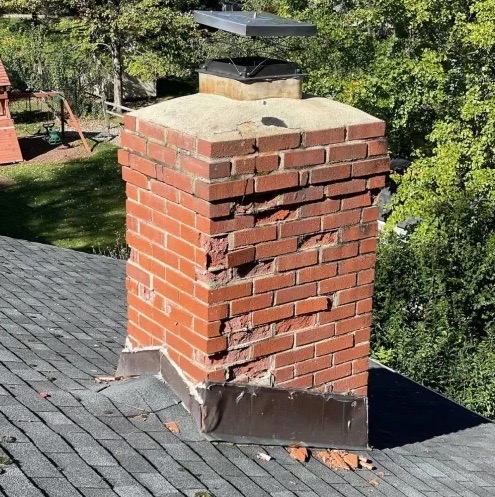
From the driveway, a failing chimney and a fine one look about the same. The issues that matter are almost always at the top or on the inside: a crown that's cracked and shedding water into the brickwork, mortar joints that have washed out enough to let water track down the flue, flashing that has pulled away from the roof line, or a liner with gaps that let flue gases reach framing they should never touch.
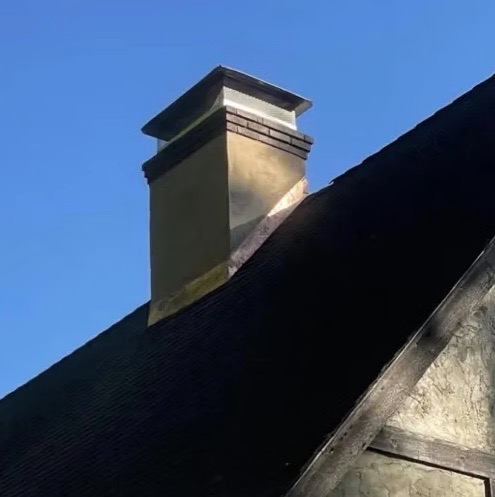
The photos on the right are the same chimney before and after. The stucco had been failing for years and the homeowner hadn't noticed anything from inside the house. If you're seeing stains on the ceiling near the chimney chase or debris in the firebox, that's usually further along than it looks — our post on why chimneys leak walks through the usual culprits.
"They completely rebuilt my chimney from the ground up and also did the exterior work on my house. The quality of their work was outstanding from beginning to end."
See our profile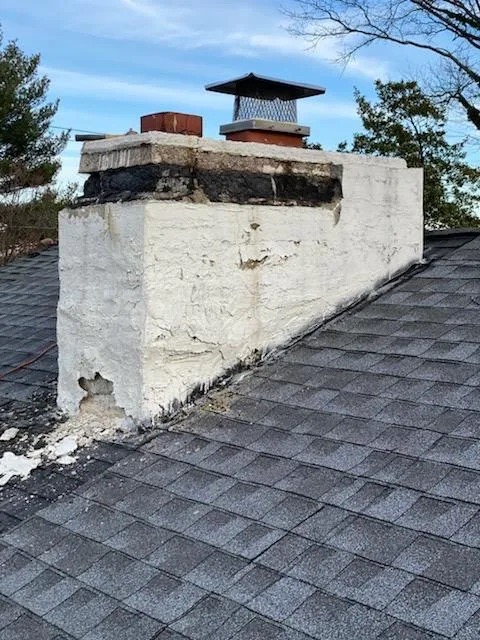
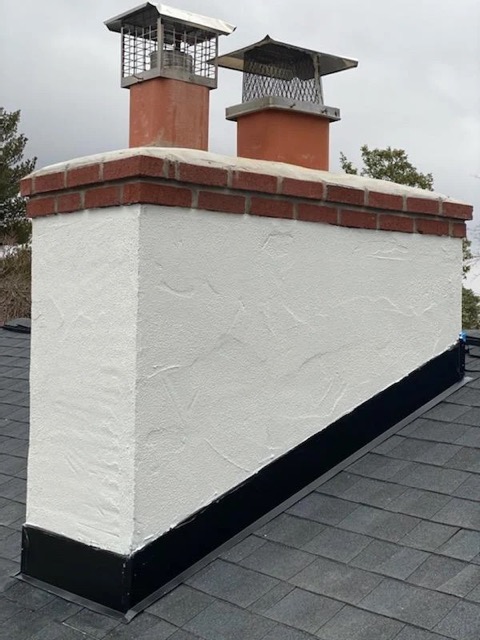
Failing stucco and a deteriorated cap on the left, rebuilt with new stucco, a brick top cap and fresh base flashing on the right. Drag the handle to compare.
You Should See What They Saw
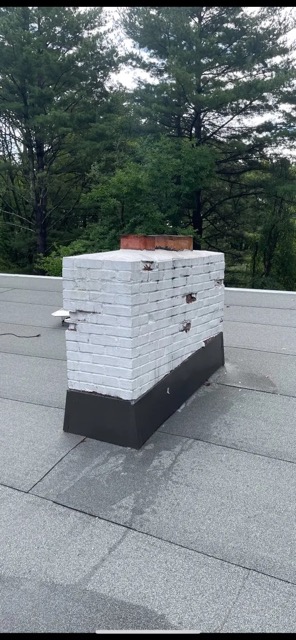
Whatever level of inspection you book, ask for photos. A chimney sits thirty feet up and most of the important detail is somewhere you'll never stand, so a report that just says "crown needs attention" is asking you to spend money on faith. Pictures of the actual crack, the actual joint, the actual liner section change that conversation completely.
It also gives you something to compare against next year, and something to hand a second contractor if you want another opinion. We photograph what we find on every job, including the parts that are fine — a clean bill of health is worth documenting too.
"Top Notch 1 did a great job on my roof. From start to finish they were professional, friendly and finished my chimney in a timely fashion."
See our profile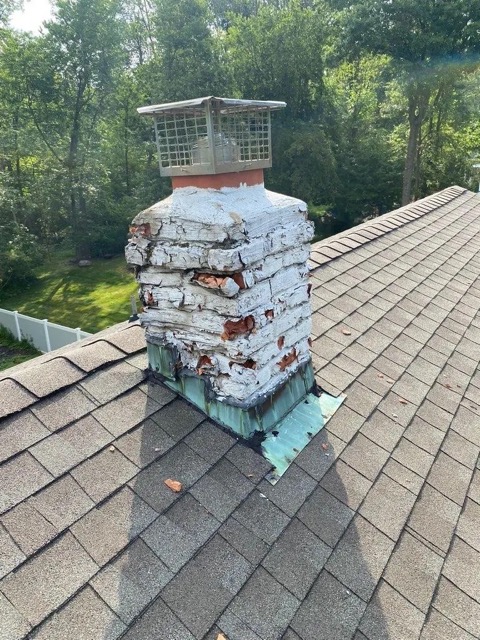

What a Level 2 Visit Actually Looks Like
Six steps, start to finish. Most homes take between one and two hours depending on access and how many flues are in the stack.
1. Book the Visit
Tell us what changed — a sale, a fire, a new appliance, or just a chimney you haven't looked at in years. That determines the scope.
2. Interior Walkthrough
Firebox, damper, smoke chamber and the appliance connection get checked first, along with the accessible attic, basement or crawl space runs.
3. Clearance Check
Where the chimney passes through framing, we confirm the clearances to combustible material meet code for the appliance you're running.
4. Camera Down the Flue
A camera scan shows the full interior of the liner — tile joints, cracks, spalling, and any creosote buildup that needs to come out.
5. Exterior and Rooftop
Crown, cap, flashing, mortar joints and the top courses of brick get inspected up close, not squinted at from the lawn.
6. Findings and Pricing
You get the photos, a plain explanation of what they show, and on-the-spot pricing if repairs are needed. No pressure either way.
Chimney Inspections, Answered
Once a year is the standard recommendation for any chimney that gets used, and that annual visit is normally a Level 1. If nothing about your system has changed and you use the fireplace occasionally, that's sufficient. Heavier use — a wood stove running all winter, for instance — makes an annual check more important, not less.
No, though they're often done in the same visit. An inspection assesses condition and safety. A sweep removes soot and creosote. An inspection may tell you a sweep is needed, and a sweep sometimes uncovers damage that wasn't visible under the buildup, but they're separate pieces of work.
NFPA 211 calls for a Level 2 upon sale or transfer of a property. Whether it's contractually required in your specific transaction depends on the contract, the buyer's agent and the home inspector, so check with your attorney or agent. In practice, buyers in New Jersey frequently ask for one, and having it done ahead of time is usually easier than negotiating it during attorney review.
A chimney that draws well can still have a cracked liner or a failing crown. Most of the serious problems don't announce themselves — they show up as water damage months later, or as a carbon monoxide issue you can't see or smell. Working correctly and being in good condition aren't the same thing.
Yes, and this catches a lot of people out. Changing an appliance changes what the flue has to handle, and a modern high-efficiency unit often vents cooler and wetter than the one it replaced. That combination is hard on old masonry flues. Local code frequently requires a properly sized liner with the new appliance, which is why a Level 2 is the right call after any appliance change.
You'll get photos of the problem and an explanation of what it means before anyone talks about money. If repairs are warranted, we price them on the spot so you can decide with real numbers rather than waiting on a quote. You're free to get a second opinion, and the photos are yours to take with you.
I contacted Top Notch 1 and spoke with Claude, who came out the very next morning to inspect the chimney. He thoroughly explained the installation process, discussed the project logistics, and answered all of my questions. Their workmanship, attention to detail, and respect and care for my home were exceptional from start to finish.
If the Inspection Finds Something
Chimney Repair
Repointing, crown repair, cap replacement and flashing work — the fixes that keep water out before it becomes structural.
Learn MoreChimney Lining Systems
Stainless liners sized to your appliance, installed and insulated. Backed by a lifetime warranty on the lining system.
Learn MoreFlue Repair
Cracked tiles, failed joints and damaged flue sections repaired so combustion gases stay where they belong.
Learn MoreWhat You Get With Top Notch 1
CSIA Certified
Our technicians hold Chimney Safety Institute of America certification and bring over 20 years of hands-on experience to every job.
Industry-Leading Warranties
50-year warranty on chimney rebuilds and a lifetime warranty on lining systems. We stand behind the work long after the truck leaves.
Free Estimates, Priced On Site
You get real numbers while we're at your house, not a follow-up email three days later. No-pressure consultations, always.
Family-Owned Since 2012
A local New Jersey business, not a national franchise routing your call to a dispatcher three states away.
16 Counties Covered
From Bergen down to Cherry Hill, we cover most of the state — including the towns everyone else says are too far out.
A+ BBB and Google Guaranteed
An A+ rating with the Better Business Bureau, Google Guaranteed status, and a 4.7-star Google rating from real customers.
Areas We Serve
Find Out What You're Working With
Whether you need a routine annual check or a full Level 2 before a sale, the first step is the same: someone qualified takes a proper look. Our estimates are free, priced on site, and there's no pressure to book anything.
Get in Touch
Call or send us a message and tell us what's going on with your chimney.
We Take a Look
A CSIA-certified tech comes out, assesses the chimney and photographs what matters.
You Decide
Clear findings, on-the-spot pricing, and a decision that's entirely yours to make.
The symptoms homeowners notice first, and what each one usually means before winter sets in.
When a camera scan turns up cracked tiles, here's how to tell whether a liner is the answer.